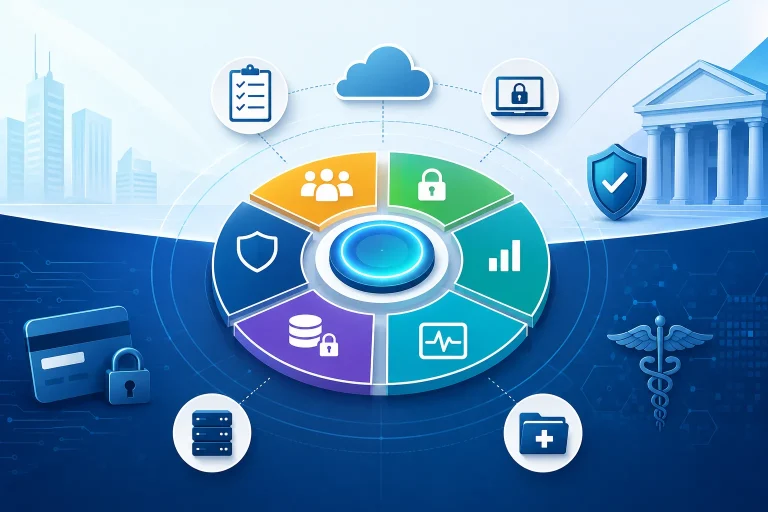
Enhance Security Posture with Global Standards Tailored Controls
Secure Every Corner of Business with Tailored Controls
Identify (ID)
Asset Management
- Challenge:
- Blind Spots: Incomplete or outdated asset inventories leave security gaps.
- Unmanaged Assets: Difficulty tracking and managing temporary or new assets increases risk.
- Solution:
- Automated Discovery: Use tools to continuously scan and update asset inventories in real-time.
- Dynamic Management: Regularly review and update the asset list to ensure all assets are tracked.
Risk Assessment
- Challenge:
- Unidentified Risks: Failure to identify risks consistently can lead to vulnerabilities.
- Inconsistent Evaluations: Inconsistent assessments may miss critical threats.
- Solution:
- Standardized Assessments: Use established methodologies for regular risk assessments.
- Continuous Monitoring: Periodically update risk assessments to reflect new threats.
Security Framework
- Challenge:
- Framework Complexity: Adopting and integrating security frameworks can be complex.
- Compliance Overlap: Managing multiple frameworks may lead to overlapping or conflicting requirements.
- Solution:
- Framework Integration: Develop a cohesive strategy that aligns multiple frameworks.
- Regular Updates: Keep frameworks updated with current standards and practices.


Protect (PR)
Access Controls (IAM/PAM)
- Challenge:
- Unauthorized Access: Risks of unauthorized access by internal or external threats.
- Complex Management: Difficulty in managing and enforcing access across diverse systems.
- Solution:
- IAM/PAM Systems: Implement Identity and Access Management and Privileged Access Management systems.
- Regular Reviews: Frequently review and adjust access permissions.
Network Segmentation
- Challenge:
- Broad Attack Surface: A lack of segmentation increases the risk of widespread attacks.
- Complex Configuration: Configuring and managing network segmentation can be complex.
- Solution:
- Segment Networks: Divide networks into segments to contain and limit breaches.
- Regular Updates: Update segmentation policies based on changing needs and threats.
Endpoint Protection
- Challenge:
- Endpoint Vulnerabilities: Unprotected endpoints can be entry points for attacks.
- Diverse Endpoint Types: Managing protection across various types of endpoints can be challenging.
- Solution:
- Unified Protection: Implement endpoint protection solutions.
- Regular Updates: Keep endpoint protection tools updated with the latest security patches.
Web Application Firewall (WAF)
- Challenge:
- Web Vulnerabilities: Web applications are vulnerable to various attacks like SQL injection and cross-site scripting.
- False Positives: WAFs can generate false positives, affecting legitimate traffic.
- Solution:
- Deploy WAF: Implement a Web Application Firewall to filter and monitor HTTP traffic.
- Regular Tuning: Adjust WAF rules to minimize false positives while maintaining protection.
Data Encryption & Key Management
- Challenge:
- Data Interception: Risk of data being intercepted during transmission.
- Unencrypted Storage: Sensitive data at rest is vulnerable if not encrypted.
- Solution:
- Encryption Protocols: Encrypt data both in transit and at rest.
- Key Management: Implement strong key management practices to secure encryption keys.
Data Loss Prevention (DLP)
- Challenge:
- Data Leaks: Risk of sensitive data being leaked or exposed.
- Complex Policies: Creating and managing DLP policies can be complex.
- Solution:
- DLP Solutions: Deploy DLP solutions to monitor and protect sensitive data.
- Policy Enforcement: Establish and enforce DLP policies across the organization.
Application Security
- Challenge:
- Application Vulnerabilities: Applications can have vulnerabilities that may be exploited.
- Security Integration: Integrating security into the development lifecycle can be challenging.
- Solution:
- Secure Development Practices: Implement secure coding practices and regular security testing.
- Security Tools: Use security tools to scan and protect applications throughout their lifecycle.
Vulnerability Assessment and Penetration Testing (VAPT)
- Challenge:
- Incomplete Assessments: Vulnerability assessments may miss certain vulnerabilities.
- False Positives: Assessment tools may generate false positives, leading to unnecessary remediation.
- Solution:
- Regular Testing: Conduct regular and vulnerability assessments and penetration testing.
- Validate Findings: Use multiple assessment tools and validate findings to reduce false positives.
Patch Management
- Challenge:
- Delayed Patches: Timely application of patches can be difficult.
- Patch Compatibility: Patches may conflict with existing systems or applications.
- Solution:
- Automated Patching: Implement automated patch management systems to apply patches promptly.
- Compatibility Testing: Test patches in a controlled environment before deployment.
Security Awareness Training
- Challenge:
- Lack of Awareness: Employees may not be aware of security risks or best practices.
- Training Engagement: Ensuring employees are engaged and retain information from training can be challenging.
- Solution:
- Regular Training: Conduct regular security awareness training sessions.
- Interactive Modules: Use interactive and engaging training modules to improve retention.
Physical Security
- Challenge:
- Unauthorized Access: Risk of unauthorized physical access to sensitive areas.
- Security Breaches: Physical security breaches can lead to theft or damage of assets.
- Solution:
- Access Controls: Implement physical access controls such as key cards and biometric systems.
- Surveillance: Use surveillance systems to monitor and record activities in sensitive areas.
Email Security
- Challenge:
- Phishing Attacks: Risk of phishing attacks targeting employees through email.
- Malware Delivery: Emails can be used to deliver malware and other threats.
- Solution:
- Email Filtering: Use email filtering solutions to detect and block malicious emails.
- Employee Training: Educate employees on recognizing and avoiding phishing and other email-based threats.
Cloud Security
- Challenge:
- Data Exposure: Risk of data exposure and unauthorized access in cloud environments.
- Shared Responsibility: Understanding the shared responsibility model for cloud security.
- Solution:
- Cloud Security Controls: Implement security controls specific to cloud environments.
- Access Management: Use access management practices to control and monitor cloud resources.
Zero Trust Architecture
- Challenge:
- Complex Implementation: Implementing Zero Trust Architecture can be complex and resource-intensive.
- Integration with Existing Systems: Integrating Zero Trust with existing systems and processes can be challenging.
- Solution:
- Incremental Adoption: Implement Zero Trust principles incrementally to manage complexity.
- Continuous Monitoring: Use continuous monitoring to enforce Zero Trust policies.
Mobile Device Management (MDM)
- Challenge:
- Device Diversity: Managing a wide range of mobile devices and operating systems.
- Security Gaps: Ensuring consistent security across all mobile devices.
- Solution:
- Unified MDM Solution: Deploy a unified MDM solution to manage and secure all mobile devices.
- Policy Enforcement: Implement and enforce security policies for mobile devices.
Supply Chain Security
- Challenge:
- Third-Party Risks: Risks associated with third-party vendors and suppliers.
- Complex Coordination: Coordinating security efforts with multiple suppliers can be complex.
- Solution:
- Vendor Risk Management: Implement a vendor risk management program to assess and mitigate third-party risks.
- Supply Chain Monitoring: Continuously monitor and review the security posture of suppliers and partners.
Detect (DE)
Intrusion Detection Systems (IDS/IPS)
- Challenge:
- Undetected Intrusions: Failure to detect unauthorized activities can lead to breaches.
- High False Positives: Excessive false alerts can overwhelm security teams.
- Solution:
- Effective Deployment: Deploy IDS/IPS solutions that accurately detect and respond to suspicious activities.
- Tuning and Calibration: Adjust detection parameters to reduce false positives.
Security Information and Event Management (SIEM)
- Challenge:
- Data Overload: Managing and analyzing large volumes of security data can be overwhelming.
- Integration Issues: Integrating SIEM with existing systems can be complex.
- Solution:
- Centralized Management: Use SIEM solutions for centralized management and analysis of security events.
- Automated Correlation: Implement automated correlation of security data to identify threats.
Threat Intelligence
- Challenge:
- Lack of Actionable Data: Insufficient threat intelligence can leave defenses vulnerable.
- Integration Challenges: Integrating threat intelligence into existing security systems can be difficult.
- Solution:
- Intelligence Feeds: Use threat intelligence feeds to stay informed about emerging threats.
- Proactive Updates: Update security measures based on the latest threat intelligence.
Managed Detection and Response (MDR) & Extended Detection and Response (XDR)
- Challenge:
- Complex Detection: Detecting and responding to threats across multiple environments can be complex.
- Resource Constraints: Limited resources may affect the ability to manage and respond to threats effectively.
- Solution:
- MDR/XDR Services: Utilize MDR and XDR services to provide threat detection and response.
- Centralized Management: Implement centralized management for streamlined threat response.
File Integrity Monitoring (FIM)
- Challenge:
- Undetected Changes: Unauthorized changes to files can go unnoticed.
- Performance Impact: Monitoring file integrity may impact system performance.
- Solution:
- Regular Monitoring: Use FIM solutions to regularly monitor and verify file integrity.
- Efficient Tools: Choose tools that minimize performance impact while providing effective monitoring.
Behavioral Analytics
- Challenge:
- Behavioral Anomalies: Identifying and responding to anomalous behaviors can be challenging.
- False Positives: Behavioral analytics tools may generate false positives.
- Solution:
- Advanced Analytics: Implement behavioral analytics tools to detect and respond to unusual behaviors.
- Continuous Improvement: Regularly refine analytics models to reduce false positives.


Respond (RS)
Incident Response Planning
- Challenge:
- Unpreparedness: Lack of a formal incident response plan can delay response efforts.
- Coordination Issues: Effective coordination among team members can be challenging during incidents.
- Solution:
- Develop a Plan: Create and regularly update an incident response plan.
- Conduct Drills: Regularly conduct incident response drills to ensure preparedness.
Communication Strategies
- Challenge:
- Information Overload: Managing and disseminating information during an incident can be overwhelming.
- Stakeholder Management: Ensuring effective communication with all stakeholders can be complex.
- Solution:
- Clear Protocols: Establish clear communication protocols for incident response.
- Centralized Updates: Use centralized communication channels to provide updates to stakeholders.
Incident Management Tools
- Challenge:
- Tool Complexity: Using multiple tools for incident management can be complex and disjointed.
- Integration Issues: Integrating incident management tools with other security systems can be challenging.
- Solution:
- Unified Tools: Utilize integrated incident management tools to streamline response efforts.
- Effective Integration: Ensure tools are well-integrated with other security systems for efficient management.
Forensics and Investigation
- Challenge:
- Evidence Collection: Collecting and preserving evidence can be challenging.
- Complex Investigations: Investigations may be complex and time-consuming.
- Solution:
- Forensic Tools: Use forensic tools to collect and analyze evidence.
- Expert Support: Engage experts to assist with complex investigations and analysis.
Post-Incident Review
- Challenge:
- Review Gaps: Inadequate post-incident reviews may miss lessons learned.
- Actionable Insights: Extracting actionable insights from incidents can be difficult.
- Solution:
- Conduct Reviews: Perform post-incident reviews to identify lessons learned.
- Implement Improvements: Use insights to make improvements to security practices and incident response.
Recover (RC)
Business Continuity Planning
- Challenge:
- Unpreparedness: Lack of a business continuity plan can impact recovery efforts.
- Resource Constraints: Limited resources can affect continuity planning and execution.
- Solution:
- Develop and Test Plans: Create and regularly test business continuity plans.
- Resource Allocation: Allocate resources effectively to ensure continuity planning and execution.
Disaster Recovery
- Challenge:
- Recovery Time: Ensuring timely recovery from disasters can be challenging.
- Resource Management: Managing resources during a disaster can be complex.
- Solution:
- Disaster Recovery Solutions: Implement disaster recovery solutions to ensure quick recovery.
- Regular Testing: Conduct regular tests of disaster recovery plans to ensure effectiveness.
Data Backup and Restoration
- Challenge:
- Backup Integrity: Ensuring backup data is intact and recoverable can be challenging.
- Efficient Restoration: Restoring data efficiently without impacting operations can be difficult.
- Solution:
- Regular Backups: Perform regular backups and verify their integrity.
- Effective Restoration: Implement efficient data restoration processes to minimize downtime.
Lessons Learned and Improvement
- Challenge:
- Continuous Improvement: Ensuring continuous improvement based on past incidents can be difficult.
- Actionable Lessons: Extracting and implementing actionable lessons can be challenging.
- Solution:
- Review and Analyze: Regularly review and analyze past incidents to identify areas for improvement.
- Implement Changes: Use lessons learned to enhance security measures and incident response strategies.

Implementing these tailored controls can significantly reduce the risk of cyber threats, minimizing financial losses from data breaches, downtime, and regulatory fines. By proactively securing assets, endpoints, networks, and applications, organizations can avoid costly incidents and maintain operational continuity. While it is not mandatory to implement all controls, each organization should assess its specific needs and risk profile to prioritize the most relevant controls. To achieve optimal security and cost efficiency, Access0day can help tailor a solution that aligns with your business objectives. For more detailed information, read more Access0day’s Cybersecurity Controls.
In Addition to Tailored Controls, Implement Security Frameworks for Holistic Protection
Talk to us forUnparalleled ExpertiseCutting-Edge TechniquesTailored SolutionsProactive ApproachTrusted Partnership
Do you have a complete oversight of your Security Posture?
Unlock Insights by Scheduling Your Comprehensive Discovery Call Now
-
Why Frameworks Are Not Your Security Strategy
The CIO & CISO Guide to Cybersecurity Frameworks: From Compliance to True Resilience Frameworks are maps, not journeys….
-
Unleashing the Power of Structured Network Cabling in Delhi
A seamless foundation for your digital connectivity In today’s fast-paced digital era, reliable structured network cabling services in…
-
Why Your Business Needs SAST, DAST, IAST, VAPT, RASP, and HAST for Complete Security
Static Application Security Testing (SAST) examines code for vulnerabilities without executing it, aiding in early detection of issues…