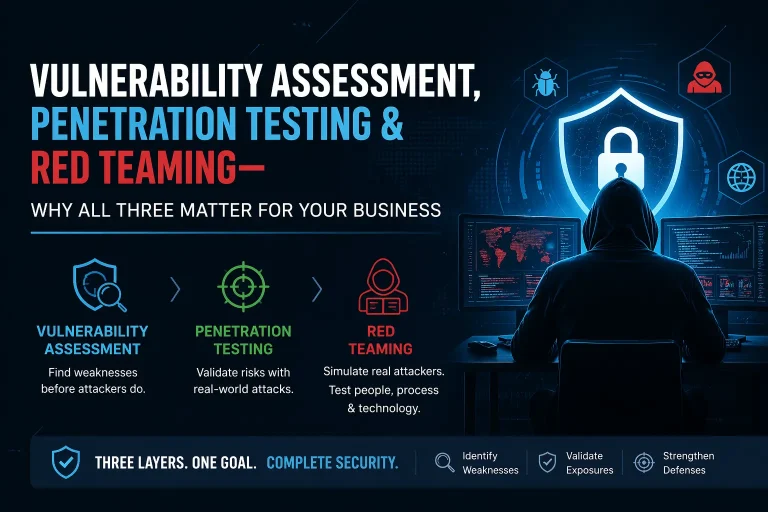
Tailored Critical Security Controls for Enhanced Organizational Security
At Access0day, we provide tailored critical security controls to enhance your organization’s security posture. Our approach ensures that each control is customized to meet your specific needs, addressing vulnerabilities and threats effectively. By implementing these key measures, we help safeguard your data, maintain compliance, and protect your business from evolving cyber threats. Our expertise and strategic solutions provide comprehensive protection, allowing your organization to operate securely and confidently. Partner with Access0day for a robust and resilient security framework.
Identification (ID)
Asset Management
- Reason: Keeping track of all your devices and software helps prevent unauthorized use and security issues.
- ROI: Reduces risks of data breaches and operational disruptions.
- ROI Formula: ROI = (Cost Avoided from Incidents / Cost of Asset Management) × 100
- Artifacts Required for Auditing: Asset inventory list, records of asset acquisition and disposal.
- Benefit: Better visibility and control over all company assets.
- Recommended Solution: Use a tool that automatically tracks and updates information about all your assets, including hardware and software.
Risk Assessment
- Reason: Identifying and evaluating risks helps you understand potential threats and vulnerabilities to your business.
- ROI: Helps prioritize security efforts and allocate resources more effectively.
- ROI Formula: ROI = (Cost of Risk Mitigated / Cost of Risk Assessment) × 100
- Artifacts Required for Auditing: Risk assessment reports, risk management plans.
- Benefit: Improved understanding of risks, leading to better security measures.
- Recommended Solution: Use a structured method or software to evaluate risks and create a plan for managing them.
Security Framework
- Reason: A security framework provides a structured approach to managing and improving your security posture.
- ROI: Ensures comprehensive security coverage and helps meet compliance requirements.
- ROI Formula: ROI = (Cost Savings from Compliance / Cost of Implementing Framework) × 100
- Artifacts Required for Auditing: Framework implementation documents, compliance reports.
- Benefit: Consistent and effective security practices across the organization.
- Recommended Solution: Implement a recognized framework that guides your security practices and helps you meet industry standards.
Protection (PR)
Access Controls (IAM/PAM)
- Reason: Managing who can access what information is crucial for protecting sensitive data.
- ROI: Reduces the risk of unauthorized access and potential data breaches.
- ROI Formula: ROI = (Cost Avoided from Unauthorized Access / Cost of Access Control System) × 100
- Artifacts Required for Auditing: Access control policies, user access logs.
- Benefit: Enhanced control over user access to critical systems and data.
- Recommended Solution: Use tools that manage and monitor user access, ensuring that only authorized personnel can access sensitive information.
Network Segmentation
- Reason: Dividing your network into smaller segments limits the spread of attacks and protects sensitive information.
- ROI: Minimizes potential damage from security breaches and improves network performance.
- ROI Formula: ROI = (Damage Reduction from Network Segmentation / Cost of Network Segmentation) × 100
- Artifacts Required for Auditing: Network diagrams, segmentation policies.
- Benefit: Increased security and better management of network traffic.
- Recommended Solution: Implement network segmentation to isolate critical systems and restrict unauthorized access.
Endpoint Protection
- Reason: Securing individual devices (endpoints) prevents them from being entry points for attacks.
- ROI: Protects against malware and unauthorized access, reducing downtime and data loss.
- ROI Formula: ROI = (Cost Avoided from Malware and Downtime / Cost of Endpoint Protection) × 100
- Artifacts Required for Auditing: Endpoint security policies, device protection logs.
- Benefit: Enhanced security for all devices connected to your network.
- Recommended Solution: Use security solutions to protect all devices from malware and unauthorized access.
Web Application Firewall (WAF)
- Reason: Protects web applications from common threats and attacks such as SQL injection.
- ROI: Safeguards online services and reduces the risk of data breaches.
- ROI Formula: ROI = (Cost Avoided from Web Application Attacks / Cost of WAF Implementation) × 100
- Artifacts Required for Auditing: WAF configuration records, traffic logs.
- Benefit: Improved security for web applications and online transactions.
- Recommended Solution: Use a firewall to filter and monitor traffic to your web applications, blocking malicious requests.
Data Encryption
- Reason: Encrypting data makes it unreadable to unauthorized users, protecting sensitive information.
- ROI: Reduces the risk of data breaches and complies with data protection regulations.
- ROI Formula: ROI = (Cost Avoided from Data Breaches / Cost of Encryption) × 100
- Artifacts Required for Auditing: Encryption policies, records of encryption key management.
- Benefit: Enhanced protection for data at rest and in transit.
- Recommended Solution: Apply encryption to all sensitive data to keep it secure from unauthorized access.
Data Loss Prevention (DLP)
- Reason: Prevents sensitive data from being leaked or lost through various means.
- ROI: Helps avoid data breaches and maintain compliance with data protection laws.
- ROI Formula: ROI = (Cost Avoided from Data Loss / Cost of DLP Implementation) × 100
- Artifacts Required for Auditing: DLP policies, incident reports.
- Benefit: Better control over the flow of sensitive data and prevention of unauthorized leaks.
- Recommended Solution: Use DLP tools to monitor and control how data is used and shared to prevent unauthorized leaks.
Application Security
- Reason: Ensures that applications are secure from vulnerabilities that could be exploited by attackers.
- ROI: Reduces the risk of application-related breaches and data loss.
- ROI Formula: ROI = (Cost Avoided from Application Breaches / Cost of Application Security Measures) × 100
- Artifacts Required for Auditing: Application security policies, vulnerability assessment reports.
- Benefit: More secure applications that protect against cyber threats.
- Recommended Solution: Integrate security measures into the development of applications and use testing tools to identify vulnerabilities.
Vulnerability Assessment and Penetration Testing (VAPT)
- Reason: Identifies weaknesses in your systems and tests how they can be exploited.
- ROI: Helps fix vulnerabilities before attackers can exploit them, reducing risk.
- ROI Formula: ROI = (Cost Avoided from Exploited Vulnerabilities / Cost of VAPT) × 100
- Artifacts Required for Auditing: VAPT reports, remediation plans.
- Benefit: Improved security by finding and addressing vulnerabilities.
- Recommended Solution: Use services to regularly assess and test systems for vulnerabilities and weaknesses.
Patch Management
- Reason: Keeping software up-to-date with patches prevents exploitation of known vulnerabilities.
- ROI: Reduces the risk of security breaches and system downtime.
- ROI Formula: ROI = (Cost Avoided from Unpatched Vulnerabilities / Cost of Patch Management) × 100
- Artifacts Required for Auditing: Patch management records, update logs.
- Benefit: Enhanced security and stability of systems and applications.
- Recommended Solution: Implement a systematic process for applying patches and updates to ensure software is current.
Security Awareness Training
- Reason: Educates employees about security best practices and how to recognize threats like phishing.
- ROI: Reduces the risk of human error and improves overall security posture.
- ROI Formula: ROI = (Cost Avoided from Security Incidents / Cost of Training Programs) × 100
- Artifacts Required for Auditing: Training records, assessment results.
- Benefit: More informed and vigilant employees who can help prevent security incidents.
- Recommended Solution: Provide ongoing training sessions and use interactive tools to educate employees about security threats.
Physical Security
- Reason: Protects physical access to systems and data from unauthorized individuals.
- ROI: Prevents physical breaches that could lead to data theft or damage.
- ROI Formula: ROI = (Cost Avoided from Physical Breaches / Cost of Physical Security Measures) × 100
- Artifacts Required for Auditing: Security access logs, facility security plans.
- Benefit: Increased protection of physical assets and sensitive information.
- Recommended Solution: Use access control systems and surveillance tools to monitor and restrict physical access to critical areas.
Email Security
- Reason: Protects against email-based threats such as phishing, spam, and malware.
- ROI: Reduces the risk of email-borne attacks and enhances overall security.
- ROI Formula: ROI = (Cost Avoided from Email Threats / Cost of Email Security Solutions) × 100
- Artifacts Required for Auditing: Email security policies, threat detection reports.
- Benefit: Improved protection against malicious email attacks and unauthorized access.
- Recommended Solution: Implement email security solutions to filter out malicious content and protect against email threats.
Cloud Security
- Reason: Ensures that data and applications stored in cloud environments are protected from unauthorized access and breaches.
- ROI: Enhances the security of cloud-based resources and helps maintain data privacy.
- ROI Formula: ROI = (Cost Avoided from Cloud Security Incidents / Cost of Cloud Security Solutions) × 100
- Artifacts Required for Auditing: Cloud security configurations, access control logs.
- Benefit: Secure cloud environments that protect against data breaches and unauthorized access.
- Recommended Solution: Use cloud security tools and practices to safeguard data and applications hosted in the cloud.
Zero Trust Architecture
- Reason: Adopts a “never trust, always verify” approach to ensure that every request, inside or outside the network, is authenticated and authorized.
- ROI: Reduces the risk of unauthorized access and lateral movement within the network.
- ROI Formula: ROI = (Cost Avoided from Unauthorized Access / Cost of Zero Trust Implementation) × 100
- Artifacts Required for Auditing: Zero Trust policies, access control logs.
- Benefit: Enhanced security posture by verifying every access request, regardless of origin.
- Recommended Solution: Implement Zero Trust principles to continuously authenticate and authorize users and devices.
Mobile Device Management (MDM)
- Reason: Manages and secures mobile devices to protect against threats and ensure compliance with company policies.
- ROI: Prevents data loss and unauthorized access from mobile devices.
- ROI Formula: ROI = (Cost Avoided from Mobile Device Breaches / Cost of MDM Solutions) × 100
- Artifacts Required for Auditing: MDM policies, device management logs.
- Benefit: Secure management of mobile devices, ensuring they are compliant and protected.
- Recommended Solution: Implement MDM solutions to monitor, manage, and secure mobile devices used in the organization.
Supply Chain Security
- Reason: Protects against risks associated with third-party vendors and supply chain partners.
- ROI: Reduces the risk of vulnerabilities introduced through third parties and ensures secure supply chain operations.
- ROI Formula: ROI = (Cost Avoided from Supply Chain Vulnerabilities / Cost of Supply Chain Security Measures) × 100
- Artifacts Required for Auditing: Supply chain security policies, vendor risk assessments.
- Benefit: Improved security and risk management across the supply chain.
- Recommended Solution: Implement security measures and assessments to manage and mitigate risks associated with third-party vendors and supply chain partners.
Detection (DE)
Security Information and Event Management (SIEM)
- Reason: Collects and analyzes security data to detect and respond to threats in real-time.
- ROI: Provides early detection of threats and improves incident response.
- ROI Formula: ROI = (Cost Avoided from Missed Threats / Cost of SIEM) × 100
- Artifacts Required for Auditing: SIEM logs, incident reports.
- Benefit: Enhanced threat detection and incident management.
- Recommended Solution: Deploy SIEM solutions to aggregate and analyze security data from across your network.
Threat Intelligence
- Reason: Provides insights into emerging threats and vulnerabilities to enhance defensive measures.
- ROI: Improves preparedness and response to evolving threats.
- ROI Formula: ROI = (Cost Avoided from Threats / Cost of Threat Intelligence) × 100
- Artifacts Required for Auditing: Threat intelligence reports, analysis records.
- Benefit: Improved preparedness and response to evolving threats.
- Recommended Solution: Subscribe to threat intelligence feeds and services to get updates on the latest threats and vulnerabilities.
Security Analytics
- Reason: Analyzes security data to identify patterns and anomalies that may indicate potential threats.
- ROI: Improves threat detection and response by providing actionable insights.
- ROI Formula: ROI = (Cost Avoided from Missed Threats / Cost of Security Analytics Tools) × 100
- Artifacts Required for Auditing: Analytics reports, incident records.
- Benefit: Enhanced understanding of security trends and better threat management.
- Recommended Solution: Implement analytics tools to analyze security data and detect unusual activities.
Incident Response
- Reason: A structured approach to managing and mitigating the impact of security incidents.
- ROI: Reduces the impact and recovery time from security incidents.
- ROI Formula: ROI = (Cost Savings from Faster Incident Handling / Cost of Incident Response Plan) × 100
- Artifacts Required for Auditing: Incident response plans, incident logs.
- Benefit: Faster and more effective resolution of security incidents.
- Recommended Solution: Develop and practice incident response plans to ensure quick and efficient handling of security events.
Recovery (RC)
Disaster Recovery Planning
- Reason: Prepares for recovery from major disruptions or disasters to ensure business continuity.
- ROI: Minimizes downtime and data loss during and after a disaster.
- ROI Formula: ROI = (Cost Avoided from Downtime / Cost of Disaster Recovery Plan) × 100
- Artifacts Required for Auditing: Disaster recovery plans, recovery testing records.
- Benefit: Ensures business operations can continue with minimal disruption.
- Recommended Solution: Create and regularly update a disaster recovery plan to address potential disruptions.
Backup and Recovery Solutions
- Reason: Ensures that critical data is backed up and can be restored in case of loss or corruption.
- ROI: Reduces data loss and minimizes downtime during recovery.
- ROI Formula: ROI = (Cost Avoided from Data Loss / Cost of Backup Solutions) × 100
- Artifacts Required for Auditing: Backup records, recovery test reports.
- Benefit: Reliable data recovery capabilities in case of data loss incidents.
- Recommended Solution: Implement automated backup solutions and regularly test data recovery procedures.
Business Continuity Planning
- Reason: Develops strategies to ensure that critical business functions can continue during disruptions.
- ROI: Maintains operational stability and minimizes the impact of disruptions.
- ROI Formula: ROI = (Cost Avoided from Operational Disruptions / Cost of Business Continuity Planning) × 100
- Artifacts Required for Auditing: Business continuity plans, continuity testing records.
- Benefit: Ensures that essential business functions remain operational during and after disruptions.
- Recommended Solution: Develop and test business continuity plans to ensure readiness for various types of disruptions.
Compliance Management
- Reason: Ensures adherence to regulatory requirements and industry standards to avoid penalties and legal issues.
- ROI: Avoids fines and legal costs associated with non-compliance.
- ROI Formula: ROI = (Cost Avoided from Non-Compliance Penalties / Cost of Compliance Management) × 100
- Artifacts Required for Auditing: Compliance records, audit reports.
- Benefit: Maintains regulatory compliance and reduces legal risks.
- Recommended Solution: Implement processes and tools to manage and track compliance with relevant regulations and standards.

Why It’s Important for a Company
Implementing these 35 controls is crucial for building a robust cybersecurity defense, safeguarding against a wide array of threats. They help protect sensitive data, ensure regulatory compliance, and maintain the integrity of critical systems. By mitigating risks and preventing breaches, these controls minimize potential financial losses and reputational damage. Tailored to your organization’s needs, these controls offer a proactive approach to security, ensuring business continuity and fostering customer trust. Embracing these measures with Access0day’s expertise ensures your company stays ahead of evolving threats.

Do We Need to Implement All the Security Controls and Frameworks?
The implementation of all 35 controls and security frameworks is not mandatory for every organization, but it’s highly beneficial. Here’s why:
- Risk Reduction: Comprehensive security controls significantly reduce the risk of cyber threats and data breaches.
- Regulatory Compliance: Implementing controls and frameworks ensures adherence to industry regulations like GDPR, HIPAA, and PCI DSS.
- Business Continuity: Controls and frameworks help maintain business operations during and after cyber incidents.
- Enhanced Security Posture: A holistic approach to security improves the overall resilience of your IT environment.
- Customer Trust: Strong security measures build customer confidence and trust in your services.
- Cost Efficiency: Preventative controls can save costs associated with data breaches, such as fines, legal fees, and loss of business.
- Competitive Advantage: Demonstrating robust security practices can differentiate your company in the marketplace.
- Incident Response: Preparedness with comprehensive controls enables quicker and more effective responses to security incidents.
- Data Protection: Ensures sensitive data is safeguarded against unauthorized access and breaches.
- Scalability: Security frameworks and controls can scale with your business growth, adapting to new threats and environments.
- Operational Efficiency: Streamlined security processes enhance overall operational efficiency.
- Audit Readiness: Being well-prepared for audits with established controls and frameworks.
- Third-Party Assurance: Ensuring that third-party vendors and partners comply with security standards.
- Continuous Improvement: Regularly updating controls and frameworks helps stay ahead of emerging threats.
- Continuous Scanning: Non-stop monitoring of the Dark Web to detect emerging threats.
- Real-Time Alerts: Immediate notifications when your data is detected on the Dark Web.
- Reporting: Detailed reports on detected threats, including the type of data compromised and recommended actions.
- Customizable Monitoring: Tailor monitoring to focus on specific data types, such as employee credentials, customer information, and intellectual property.
- Expert Analysis: Access to cybersecurity experts who analyze and interpret data from the Dark Web.
Identify (ID)
The NIST Cybersecurity Framework (CSF) is divided into five core functions: Identify, Protect, Detect, Respond, and Recover. Each function is further divided into categories and subcategories. These categories help organizations to structure their cybersecurity practices and align them with industry standards to manage and mitigate risks effectively. Here is an overview of the categories under each function:
- Asset Management (ID.AM):
- Inventory and manage physical devices and systems, software platforms and applications, and organizational communication and data flows.
- Business Environment (ID.BE):
- Understand the organization’s role in the supply chain and its critical infrastructure.
- Governance (ID.GV):
- Establish cybersecurity policies, procedures, and processes to manage and monitor the organization’s regulatory, legal, risk, environmental, and operational requirements.
- Risk Assessment (ID.RA):
- Identify and evaluate risks to organizational operations and assets.
- Risk Management Strategy (ID.RM):
- Establish risk management processes to identify, assess, and manage risks.
- Supply Chain Risk Management (ID.SC):
- Manage risks associated with the supply chain.
Protect (PR)
- Identity Management, Authentication, and Access Control (PR.AC):
- Control who can access resources in the organization.
- Awareness and Training (PR.AT):
- Educate staff and partners on cybersecurity policies and procedures.
- Data Security (PR.DS):
- Protect the integrity, confidentiality, and availability of data.
- Information Protection Processes and Procedures (PR.IP):
- Implement security policies, processes, and procedures.
- Maintenance (PR.MA):
- Perform maintenance and repair of industrial control and information system components in accordance with policies and procedures.
- Protective Technology (PR.PT):
- Implement technical security solutions to safeguard systems and data.
Detect (DE)
- Anomalies and Events (DE.AE):
- Detect and understand anomalous activities and events.
- Security Continuous Monitoring (DE.CM):
- Continuously monitor information systems and assets to identify cybersecurity events.
- Detection Processes (DE.DP):
- Implement and test detection processes to ensure timely and accurate detection of anomalies and events.
Respond (RS)
- Response Planning (RS.RP):
- Develop and implement incident response plans and processes.
- Communications (RS.CO):
- Coordinate response activities with internal and external stakeholders.
- Analysis (RS.AN):
- Analyze incident data to understand the impact and extent of the incident.
- Mitigation (RS.MI):
- Take actions to prevent the expansion of incidents and mitigate their effects.
- Improvements (RS.IM):
- Incorporate lessons learned from incident handling activities into response plans and processes.
Recover (RC)
- Recovery Planning (RC.RP):
- Develop and implement recovery plans and processes.
- Improvements (RC.IM):
- Implement strategies for improvement based on lessons learned from recovery activities.
- Communications (RC.CO):
- Coordinate recovery activities with internal and external stakeholders to ensure timely and effective recovery operations.
Trust us for:
- Installation Support
- Timely Renewal
- Zero-Day Trust
- Learning Something New
Do you have a complete oversight of your Security Posture?
Unlock Insights by Scheduling Your Comprehensive Discovery Call Now